Gardener Ealing: Recycling and Sustainability for an Eco-Friendly Waste Disposal Area
 At Gardener Ealing we commit to creating an eco-friendly waste disposal area and a truly sustainable rubbish gardening area. Our practical, site-level work is driven by a clear environmental mission: to manage green waste as a resource, prevent useful organic material from being sent to landfill and to reduce carbon emissions from garden services. Through careful segregation, responsible transport and reuse partnerships we transform trimmings, soil and timber into compost, mulch and reclaimed materials that support local planting projects and urban biodiversity.
We have published a measurable recycling percentage target to guide our operations: 70% recycling and composting of all garden and related household materials by 2030. This target aligns our garden clearance work with broader borough ambitions and gives us a benchmark for continuous improvement. To reach this goal we use seasonal scheduling, staff training in waste separation, and investment in on-site chipping and composting tools so less material leaves the site as refuse. Transparent measurement and iterative improvement are central to how Gardener Ealing operates.
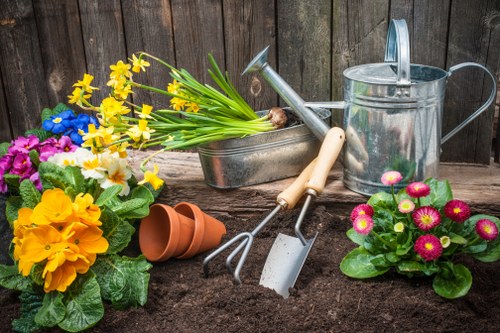 The borough’s approach to waste separation shapes how we collect and route materials across Ealing and neighbouring neighbourhoods. Many households separate dry recycling, food waste and garden waste into different bins; we mirror those streams to avoid cross-contamination and make sure materials are accepted by local processing facilities. Our recycling activity in the local area includes:
- Separate collection of green waste destined for municipal composting and anaerobic digestion
- Chipping and reuse of wood as mulch or biomass feedstock
- Segregation of soils and inert materials to suitable reuse or licensed disposal
- Sorting of glass, metal and cardboard to return to local recycling circuits
Local Transfer Stations and Charity Partnerships
Gardener Ealing coordinates regular runs to nearby transfer stations and household recycling centres to ensure that materials are processed correctly and quickly. Working with local HRCs and licensed transfer facilities reduces turnaround times and lowers the risk of contamination in recycling loads. We plan collections to match borough opening hours and acceptance criteria so that green waste, timber and recyclable packaging move efficiently into the right treatment streams.
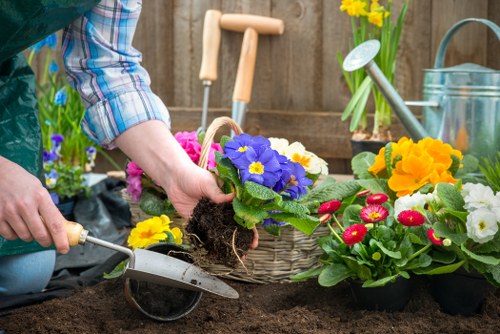 A key part of our sustainable rubbish gardening model is partnership with local charities and social enterprises. We actively collaborate with community reuse organisations, neighbourhood gardens and food redistribution groups so that usable items are repurposed rather than discarded. Typical partnerships include plant rescue charities taking surplus potted plants, community projects that accept reclaimed timber and planters, and compost-sharing schemes that turn garden residues into soil for community allotments. These alliances both support local social aims and increase the percentage of material we divert from landfill.
In practice, our charity partnerships reduce waste handling costs and generate social benefit: donations of tools, pots and usable soil go to community groups; training opportunities are offered for volunteers in reuse centres; and some restored materials are used in local public realm planting. This creates a circular loop where garden maintenance strengthens local green infrastructure.
Low-Carbon Vans, On-Site Best Practice and Performance Metrics
To minimise transport emissions in our eco-friendly waste disposal operations, Gardener Ealing is transitioning to a low-emission fleet. We currently deploy a mix of electric vans, plug-in hybrids and Euro 6 low-emission diesel vehicles where electric charging points are not yet available. Route optimisation software reduces mileage and idle time, while load consolidation and scheduled trips to transfer stations reduce repeated journeys. Low-carbon vans and smart logistics are essential in delivering a truly sustainable rubbish gardening area across the borough.
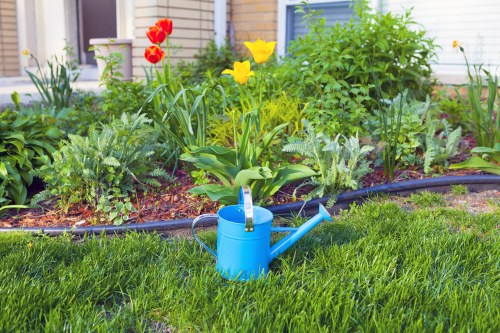 On site, our crews are trained to carry out immediate segregation: green trimmings are separated from soiled soils, timber is stockpiled for chipping, and plastics or containers are bagged for dry recycling. We chip larger branches into usable mulch, screen composted material for quality, and store materials for reuse by community projects. Best-practice horticultural techniques—such as leaving woody debris where it supports biodiversity, targeted use of mulches to reduce watering, and regular soil regeneration—help reduce waste generation at source and improve the longevity of landscapes we maintain.
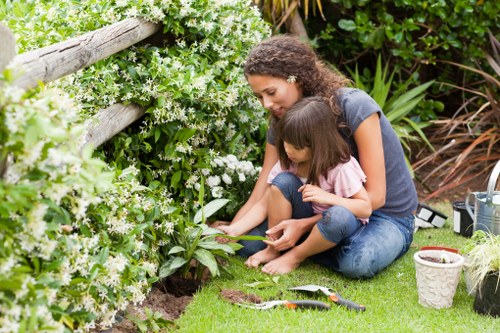 Progress against our recycling percentage target is tracked with a set of clear KPIs: tonnes diverted from landfill, percentage recycled or composted, number of charity handovers, vehicle emissions reductions and customer-level segregation compliance. We conduct periodic audits, report outcomes internally and adapt routes, infrastructure and partnerships to improve results. By combining local waste separation practices, strategic use of transfer stations, community charity collaborations and a low-carbon van fleet, Gardener Ealing delivers measurable improvements in sustainable gardening and resource recovery across Ealing and surrounding boroughs.
Beyond operations, we invest in community education and staff upskill programmes so the standards we set on-site spread into wider neighbourhood behaviour. Regular audits, seasonal reviews and collaborative planning with local organisations ensure the eco-friendly waste disposal area model remains effective and responsive to council waste policy changes. Our approach supports circularity: turning the outputs of garden maintenance into inputs for future planting rather than treating them as a cost to discard.
We promote specific, tangible activities that residents and clients can expect from our sustainable rubbish gardening service: prioritised mulching, compost production and redistribution, reuse of intact pots and fixtures, careful soil reuse and, where needed, safe handling of small quantities of hazardous horticultural materials in line with local regulations. This practical emphasis increases the overall recycling rate while maintaining safe, tidy and attractive outdoor spaces.
Gardener Ealing’s sustainability programme is more than a set of targets; it is an operational framework that brings together logistics, plant-care best practice, community partnership and low-carbon transport to create a resilient, resource-efficient model for urban gardening. By focusing on measurable diversion, licensed processing at transfer stations and strong charity links, we transform garden waste into community resources and drive toward our 70% recycling goal.